What Is Agentic AI? Chatbots, Assistants and Autonomous Agents
A clear taxonomy of AI systems — with real business examples for each tier, and when you need an agent vs a simpler solution.
A clear taxonomy of AI systems — with real business examples for each tier, and when you need an agent vs a simpler solution.
"AI agent", "AI assistant", "chatbot", "autonomous AI" — these terms are used interchangeably in product marketing and almost never defined clearly.
For a business owner deciding where to invest in AI, this confusion is expensive. You might pay for a sophisticated agent when a simple chatbot would do the job. Or deploy a basic chatbot when your use case actually requires autonomous decision-making.
Here's a clear taxonomy. Three tiers. Real examples for each.
Tier 1 — Rule-Based Chatbot
What it is: A scripted conversation system that follows a predefined decision tree. There's no AI in the traditional sense — just if-then logic.
Example: "Press 1 for sales, press 2 for support." Or a WhatsApp bot that sends your business hours when someone texts "hours."
Can it: Understand natural language? No. Make decisions? No. Handle anything off-script? No.
When to use it: Simple, high-volume, predictable interactions. "What are your opening hours?" "What's your address?" "Send me your price list." Cost: ₹0–5,000 to build, ₹0 to run.
Tools: WhatsApp Business quick replies, Manychat, basic N8N webhook flows.
Tier 2 — LLM-Powered AI Assistant
What it is: A language model (GPT-4, Claude, Gemini, or a local model) connected to a conversation interface. It understands natural language, maintains context across turns, and generates intelligent responses — but it can only respond. It cannot take actions in the world.
Example: A customer support chatbot that answers questions about your product using your knowledge base (RAG). It understands "Can I return my order if the packaging is damaged?" and gives a policy-accurate answer. But it cannot actually process the return.
Can it: Understand natural language? Yes. Maintain conversation context? Yes. Answer from your documents? Yes. Take actions? No.
When to use it: Customer support Q&A, internal knowledge bases, FAQ automation, sales qualification bots that gather information. Most businesses start here — and it's often all they need.
Tools: LangChain with a retrieval chain, N8N OpenAI node, Voiceflow, Botpress.
Cost: ₹500–3,000/month for API costs. ₹50,000–1,50,000 to build a well-engineered one.
Tier 3 — Autonomous AI Agent
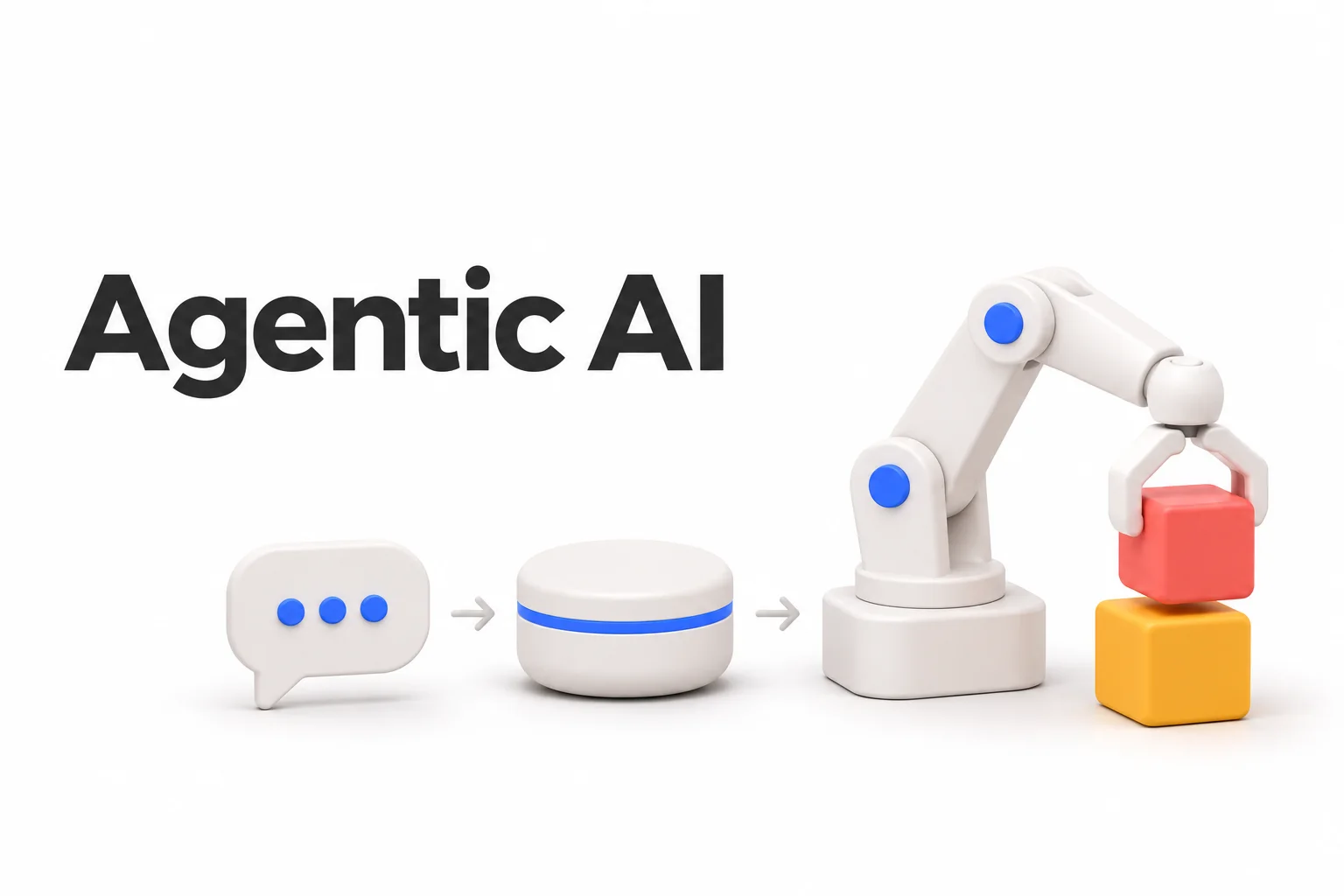
What it is: An LLM with access to tools — APIs, databases, browsers, communication channels, external services. It doesn't just respond. It acts. It can take a goal ("follow up with all leads who haven't responded in 7 days") and execute a multi-step plan to achieve it, making decisions along the way.
Example: A lead follow-up agent that: checks your CRM for leads inactive for 7+ days → looks up their LinkedIn profile → drafts a personalized follow-up email based on their industry and last interaction → sends the email → logs the action back to the CRM → if they reply, updates the lead status and notifies the sales rep.
No human involvement. No manual triggers. The agent runs on schedule and takes care of the entire workflow.
Can it: Understand language? Yes. Take actions? Yes. Make multi-step decisions? Yes. Use external tools? Yes. Work autonomously? Yes.
When to use it: Any workflow that currently requires a human to make small decisions and take actions repeatedly. Lead follow-up, appointment scheduling, invoice processing, content publishing, inventory management, customer re-engagement campaigns.
Tools: LangChain Agents, CrewAI, LangGraph, AutoGen. N8N as the action layer.
Cost: ₹3,000–15,000/month for API and infrastructure. ₹1,50,000–5,00,000 to build a robust production agent.
The Mental Model: Employee Analogy
Think of it this way:
Rule-based chatbot = A vending machine. Put in the right input, get the expected output. Cannot handle anything unexpected.
LLM AI assistant = A very knowledgeable employee who can answer any question but isn't allowed to touch anything. They can tell you the return policy but can't process your refund.
Autonomous AI agent = An employee with full access to your systems who can be given a goal and will figure out how to achieve it. "Handle all refund requests under ₹500 automatically" — and it will.
A Real Business Comparison
Scenario: A real estate developer wants to handle WhatsApp inquiries automatically.
| Approach | What It Can Do | What It Cannot Do | Cost |
|---|---|---|---|
| Rule-based bot | Send price list, share brochure, reply to "location?" | Anything conversational or unexpected | ₹0 build, ₹0/month |
| LLM assistant | Answer questions about the property, understand "What's the carpet area of a 3BHK?", handle varied phrasings | Schedule site visits, update CRM, follow up with leads | ₹50,000 build, ₹2,000/month |
| AI agent | All of the above + schedule site visits + update CRM + send reminders + follow up after visit + re-engage cold leads | (Very little — this handles the full funnel) | ₹2,00,000 build, ₹5,000/month |
The right choice depends on your volume, the value of each lead, and the cost of human staff doing it instead.
How Multi-Agent Systems Work
For complex processes, multiple specialized agents collaborate:
Example — AI content agency:
- Research agent: Finds trending topics in your industry using web search
- Writer agent: Drafts a blog post on the trending topic
- SEO agent: Reviews the draft and suggests keyword improvements
- Publisher agent: Formats and publishes to WordPress, schedules social media posts
This is a CrewAI or LangGraph implementation where each agent has a specific role and they pass their outputs to the next agent. The human sets the goal once ("publish 3 pieces of content per week") and the crew executes.
We've built multi-agent systems like this for D2C brands who publish 20–30 pieces of content per month. One person manages the strategy; the agents handle the production.
When NOT to Use an Agent
Agents are not always the right answer.
- Don't build an agent for a task that a simple automation (N8N workflow) can handle. Agents add cost, latency, and complexity.
- Don't build an agent when the task requires genuine human judgment or emotional intelligence. A customer complaint requiring empathy is not an agent task.
- Don't build an agent when you can't tolerate occasional mistakes. Agents can and do make errors. Build human review steps into any agent that takes consequential actions.
The right question is: "Would a junior employee with clear instructions be able to do this task reliably?" If yes, an agent can probably handle it. If the task requires significant domain expertise, judgment, or emotional nuance — keep a human in the loop.
Getting Started
If you're currently spending human time on any of these, you're ready for an agent:
- Following up with leads who haven't responded
- Processing repetitive form submissions or document requests
- Sending personalized re-engagement messages
- Compiling weekly reports from multiple data sources
- Routing and categorizing support tickets
Start with a scoped, low-stakes process. Prove the ROI. Then expand.
We're Monk Media One Tech — we build autonomous AI agents, LLM-powered assistants, and workflow automation for businesses in India and Canada.
Book a free discovery call: monkmediaone.tech/contact 📞 +91 88668 19349 | hello@monkmediaone.tech