

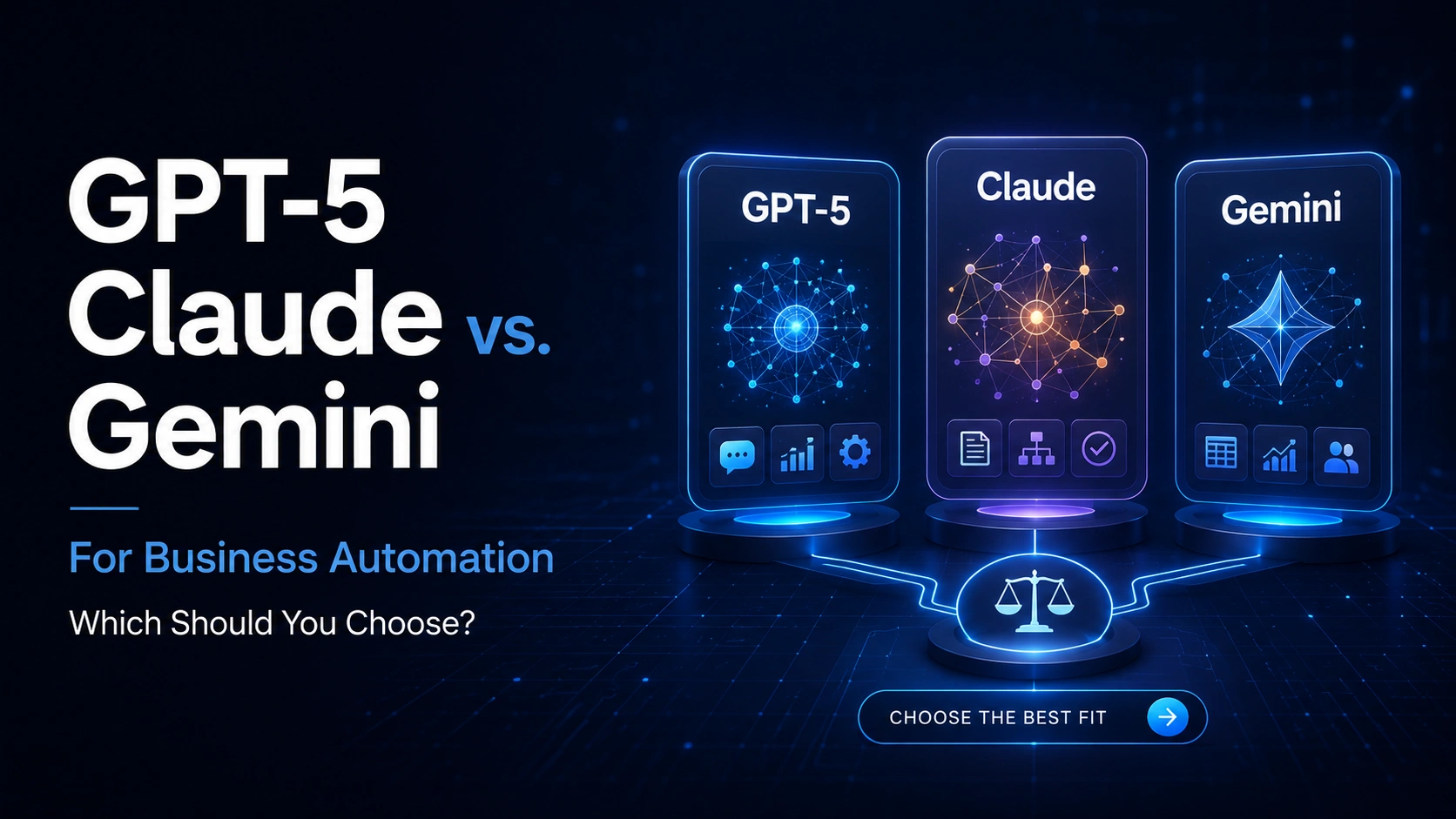
GPT-5 vs. Claude vs. Gemini for Business Automation: Which Should You Choose?
What Actually Matters for Business Automation
For most automation projects, the differences that matter aren’t abstract benchmark scores – they’re tool-calling reliability, context window size (how much information the model can consider at once), cost per request at your expected volume, and how well the model follows structured instructions without drifting off-format.
Comparison at a Glance
| Factor | GPT-5 | Claude | Gemini |
|---|---|---|---|
| Tool/agent ecosystem | Very broad, widely integrated | Strong for coding and careful multi-step reasoning | Deep native integration with Google Workspace/Docs |
| Long documents/context | Strong | Very strong | Strong, especially with Google Drive content |
| Best fit | General-purpose agents, broad integrations | Complex reasoning, careful tool use, coding agents | Teams already living in Google Workspace |
A Practical Way to Decide
Rather than picking a single “winner,” test 2–3 models on your actual, specific use case with your real data and prompts – not generic benchmarks. Many production systems at Monk Media One Tech are model-agnostic by design, so the underlying model can be swapped without rebuilding the whole workflow as pricing or capability shifts.
Frequently Asked Questions
Which model is cheapest for high-volume automation?
Pricing changes frequently across all three providers and varies by task complexity – it’s worth benchmarking cost-per-resolved-task on your actual workflow rather than relying on list price alone.
Can I use different models for different parts of the same workflow?
Yes – many production systems route simple, high-volume tasks to a cheaper/faster model and reserve a more capable model for complex reasoning steps.
Do I need to lock into one AI provider long-term?
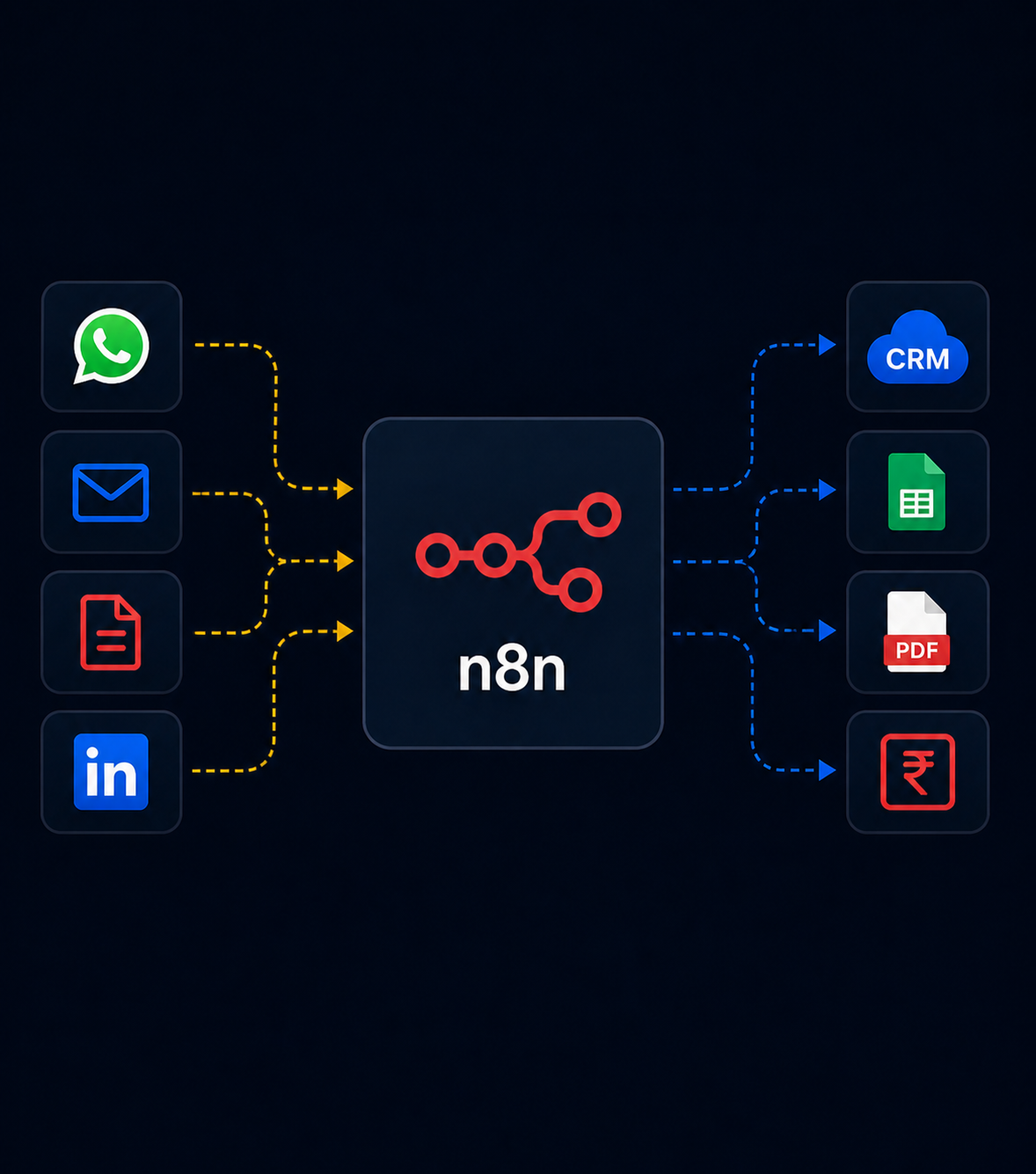
No, and it’s generally advisable not to – a well-architected orchestration layer can support switching or mixing model providers as needs change.