
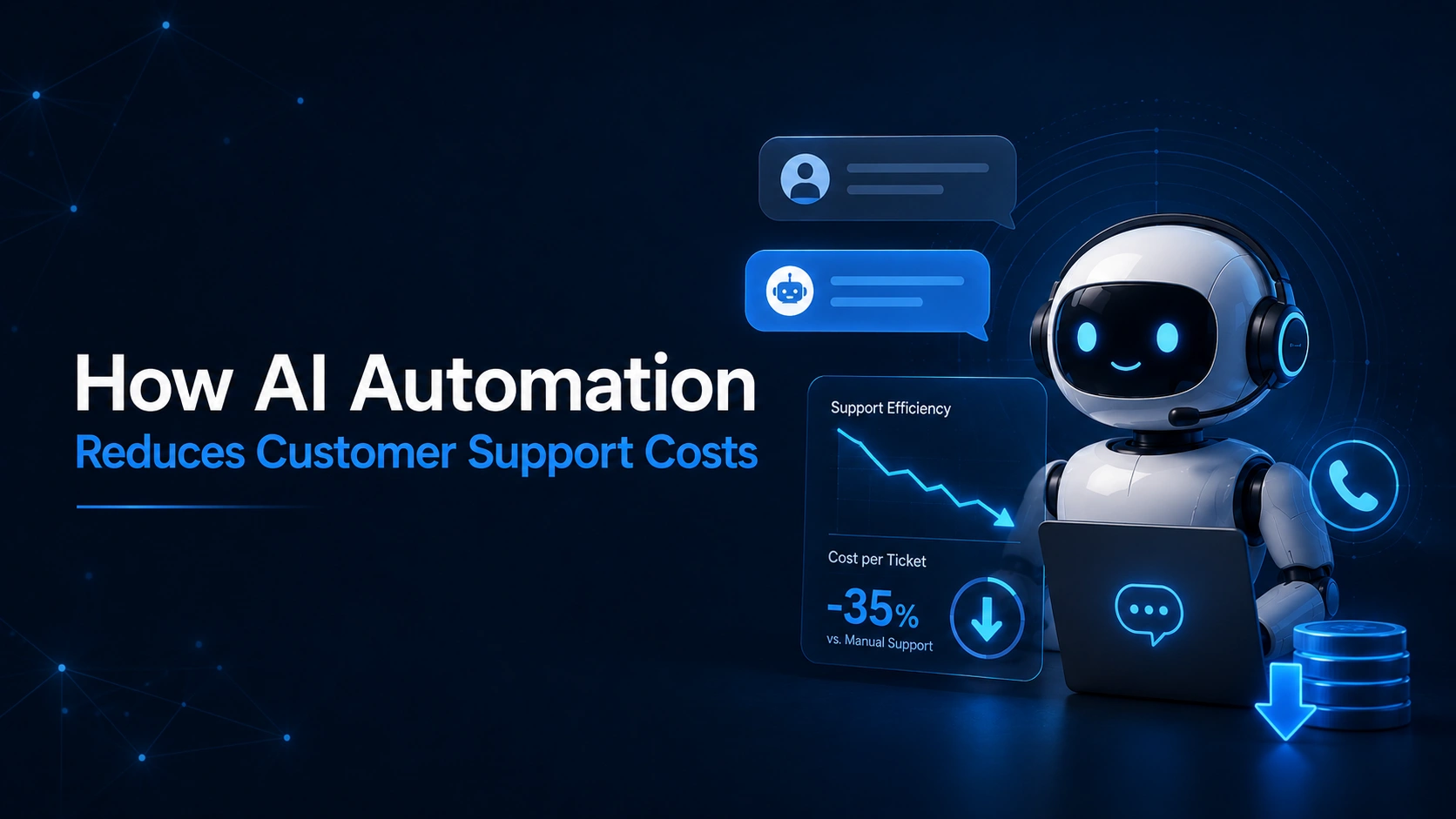
How AI Automation Reduces Customer Support Costs
Where the Savings Actually Come From
- Ticket deflection: A well-trained AI assistant can resolve 40–70% of common queries without human involvement, depending on the industry and query mix.
- Faster average handle time: AI can pull relevant knowledge base articles or order data instantly, cutting the research time human agents spend per ticket.
- Reduced seasonal hiring: Businesses with sharp seasonal spikes (e-commerce during sales periods) can absorb volume increases without temporary hiring.
- Lower training overhead: Updating an AI knowledge base takes far less time than retraining a team of human agents on a policy change.
What This Looks Like in Practice
A typical setup routes incoming queries first to an AI layer that checks a knowledge base and order/account systems. Queries it can resolve confidently are closed automatically. Anything ambiguous, emotionally charged, or outside its knowledge is escalated to a human agent – with the full conversation history attached, so the customer doesn’t have to repeat themselves.
Frequently Asked Questions
What percentage of support tickets can realistically be automated?
Most businesses see 30–60% deflection in the first few months, rising over time as the knowledge base and escalation rules are refined.
Does AI support automation hurt customer satisfaction?
When implemented with clear escalation paths and honest disclosure that the customer is talking to an AI, satisfaction scores are typically stable or improved – mainly because response times drop sharply.
How long does it take to see cost savings?
Most businesses see measurable reduction in ticket backlog and overtime costs within the first 1–2 months of deployment.