




How to Automate Invoice Processing with AI
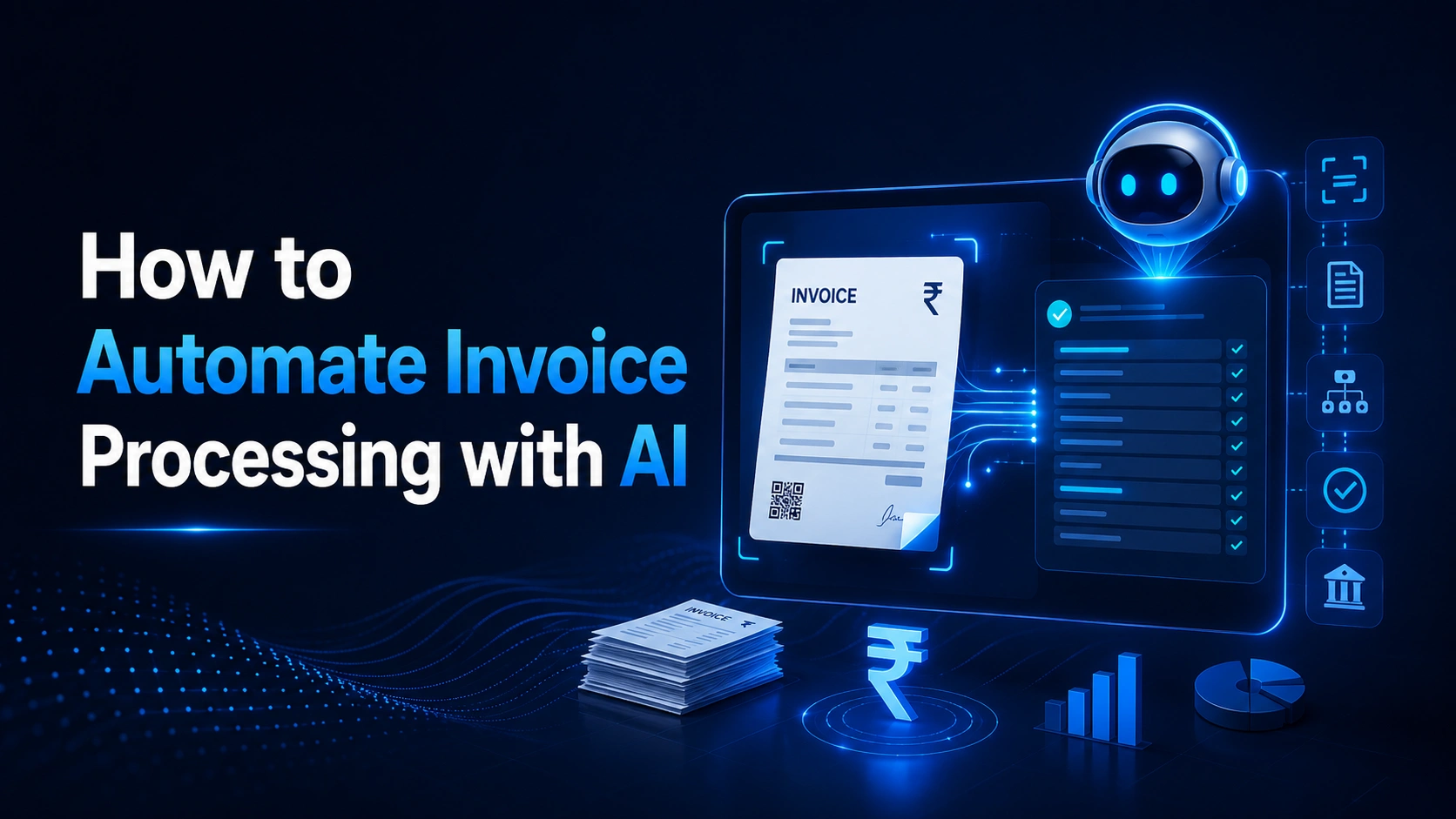
TL;DR: AI invoice automation uses document understanding models (OCR + LLM) to extract vendor, amount, line items, and GST details from PDFs or images, match them against purchase orders, flag discrepancies, and push validated entries directly into your accounting software – cutting manual data entry to near zero.
The Typical Workflow
- Capture: Invoices arrive via email, WhatsApp, or upload – often in inconsistent formats and layouts.
- Extraction: An AI document model reads the invoice and extracts structured fields (vendor name, invoice number, GSTIN, amount, due date, line items).
- Validation: The system cross-checks extracted data against purchase orders or expected vendor rates and flags mismatches.
- Approval routing: Invoices above a threshold, or with discrepancies, are routed to the right approver automatically.
- Posting: Approved invoices are pushed directly into accounting software like Tally, Zoho Books, or QuickBooks.
Why This Matters More Than It Sounds
Manual invoice entry is one of the most error-prone, time-consuming tasks in finance operations – and errors here directly affect GST filing accuracy and vendor relationships. Automating extraction and matching doesn’t just save time; it materially reduces late payments, duplicate payments, and compliance mistakes.
Key takeaways: The ROI on invoice automation comes less from “speed” and more from error reduction – duplicate payments and GST mismatches are expensive, and AI validation catches them before they become a problem.
Frequently Asked Questions
How accurate is AI invoice extraction?
Modern document-AI systems typically achieve 95%+ field-level accuracy on standard invoice layouts, with lower confidence flagged for human review rather than silently guessed.
Does this work with handwritten or scanned invoices?
Yes, though accuracy is generally lower than with digital PDFs – a human review step is recommended for low-quality scans.
Can it handle GST-specific validation for Indian businesses?
Yes – GSTIN format validation and basic tax calculation checks can be built directly into the extraction and validation pipeline.
Want to eliminate manual invoice entry? Explore Workflow Automation with Monk Media One Tech →