

What Is Agentic AI? A Business Owner’s Plain-English Guide
Definition: What “Agentic” Actually Means
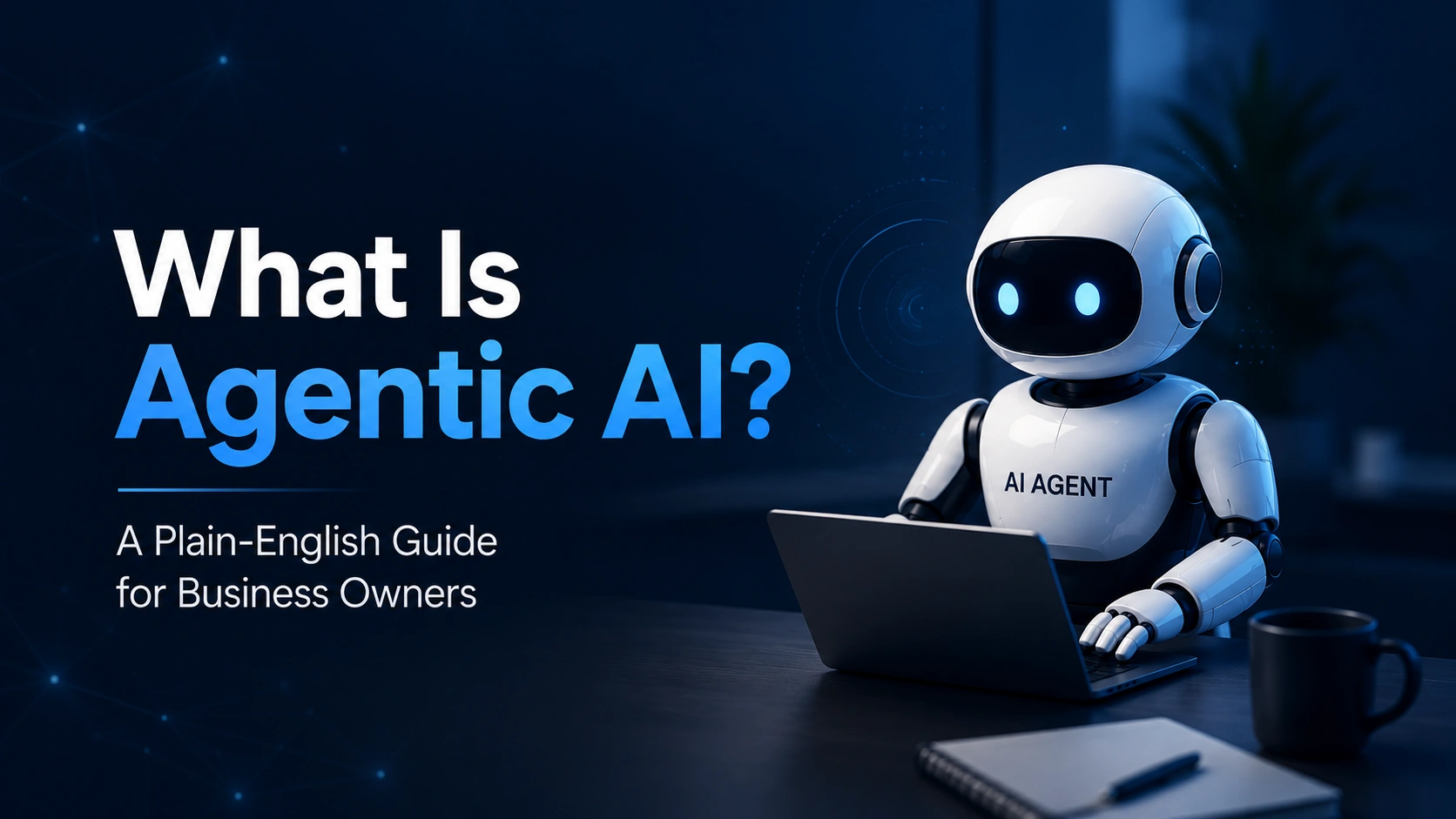
Agentic AI describes an artificial intelligence system built around a large language model (LLM) that is given a goal, a set of tools, and the autonomy to figure out the steps needed to reach that goal – without a human writing out every step in advance. The word “agentic” comes from “agent”: something that acts on your behalf.
A simple way to remember it: a traditional AI tool answers a question. An agentic AI system completes a job.
How Agentic AI Differs From Regular Automation
| Capability | Traditional Automation (Rules/RPA) | Agentic AI |
|---|---|---|
| Decision-making | Follows fixed if-then rules | Reasons about the best next step |
| Handles new situations | Breaks or needs reprogramming | Adapts using context and tools |
| Tool use | Pre-wired, single-purpose | Chooses which tool to call and when |
| Multi-step tasks | Needs a defined workflow diagram | Can plan its own sequence of steps |
Real Business Examples of Agentic AI
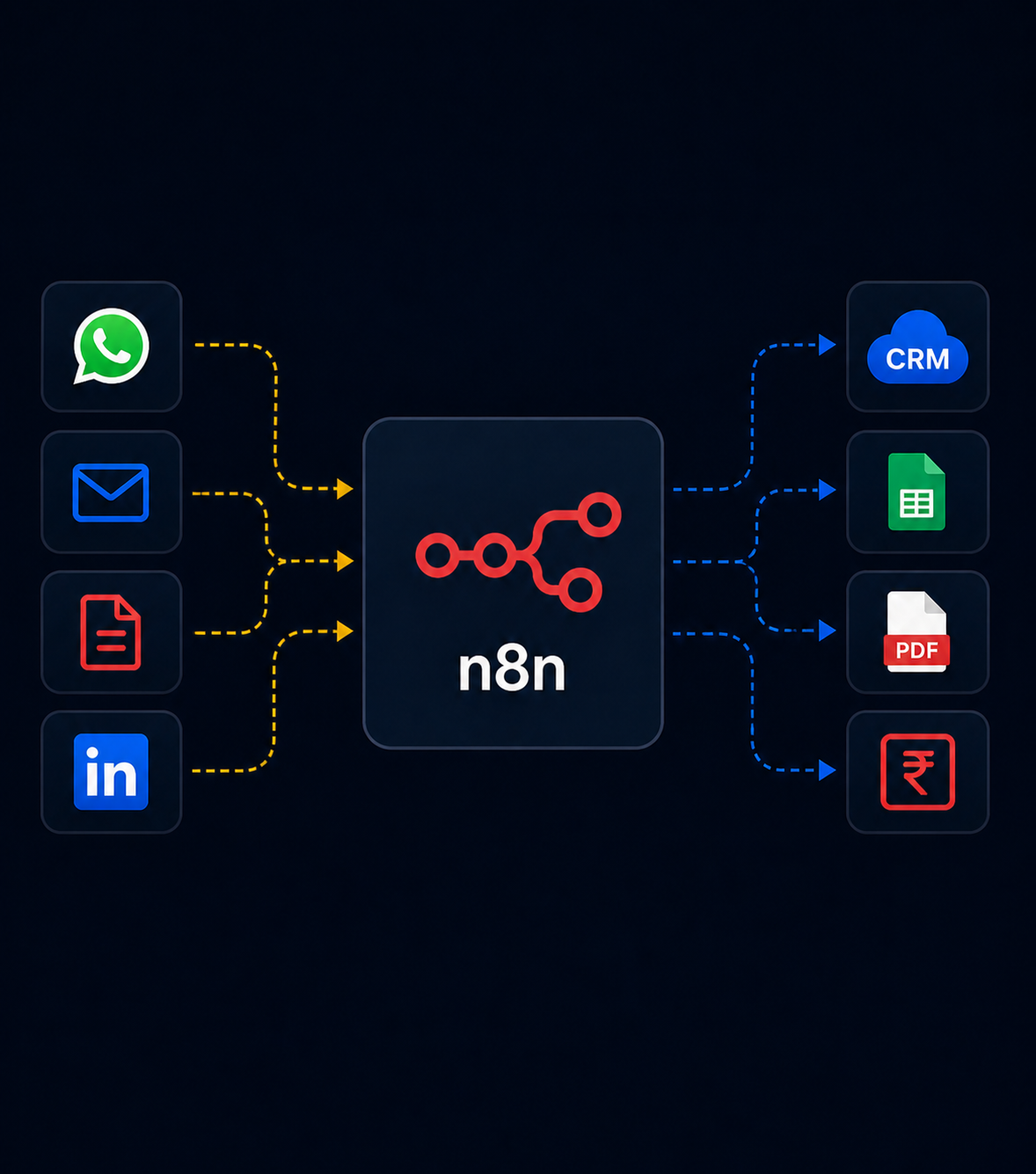
- Sales: An agent reads an inbound lead’s email, checks the CRM for prior history, drafts a personalized reply, and schedules a follow-up – all without a human triggering each step.
- Support: An agent receives a customer complaint, searches the knowledge base, checks order status via an API, and either resolves the issue or escalates it with full context attached.
- Operations: An agent monitors inventory levels, cross-checks supplier lead times, and automatically raises a purchase order when stock crosses a threshold.
Frequently Asked Questions
Is agentic AI the same as an AI agent?
Yes, in practice the terms are used interchangeably. “Agentic AI” describes the category of technology; “AI agent” usually refers to a specific implementation built for a task, such as a sales agent or support agent.
Do agentic AI systems need human oversight?
Yes. Responsible deployments include approval checkpoints for high-risk actions (like sending money or making external commitments) and logging for every decision the agent makes.
Can small businesses afford agentic AI?
Yes. Modern agent frameworks and no-code/low-code builders have made agentic AI accessible to SMBs, with typical implementation costs far lower than hiring additional full-time staff for the same repetitive workload.