

How AI Agents Handle Multi-Step Business Workflows
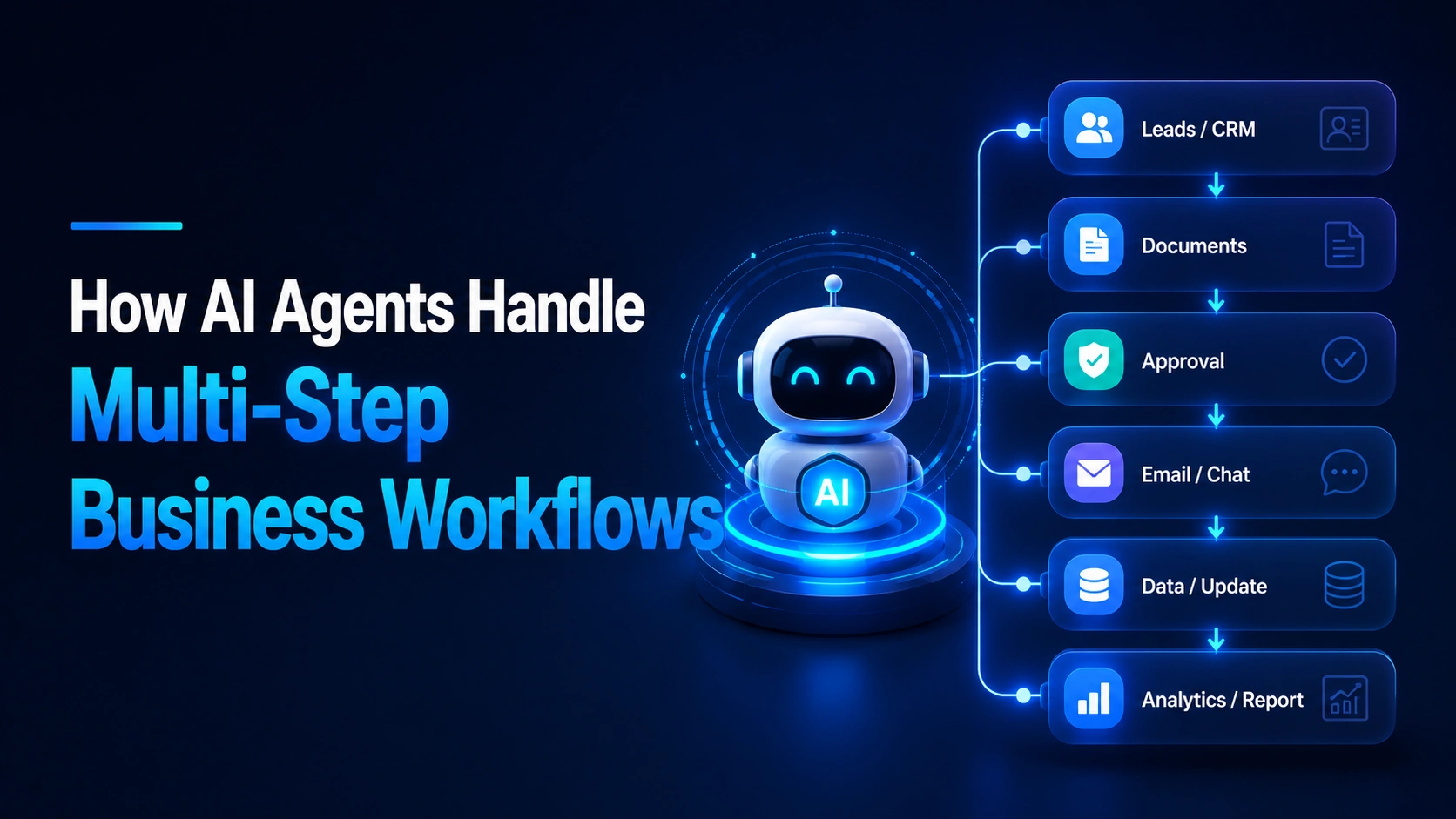
TL;DR: AI agents handle multi-step workflows by breaking a goal into sub-tasks, executing them one at a time using available tools, checking the outcome of each step, and adjusting course if something unexpected happens – rather than blindly following a fixed script.
A Worked Example: Employee Onboarding
- Agent receives a trigger: “New employee starting Monday”
- Checks HR system for role and department to determine required access levels
- Sends account creation requests to IT systems (email, Slack, tools) via API
- Schedules onboarding meetings on the manager’s and new hire’s calendars
- Sends a welcome message with first-day instructions
- Checks back in 3 days to confirm all access was provisioned correctly, and flags any exceptions to HR
Each step depends on the outcome of the previous one – this is what separates a true multi-step agent from a single-response chatbot.
What Makes Multi-Step Execution Reliable
- Clear task decomposition: Breaking a vague goal into concrete, checkable steps
- State tracking: Remembering what’s already been done so steps aren’t repeated or skipped
- Error recovery: Retrying a failed API call or escalating to a human instead of silently failing
- Checkpointing: Pausing for human approval before high-risk actions (like sending money or an external communication)
Key takeaways: The value of multi-step agents comes from eliminating the manual “glue work” between systems – the emailing, checking, and following up that humans currently do by hand between each step of a process.
Frequently Asked Questions
What happens if a step in the workflow fails?
Well-designed agents include retry logic and fallback paths, and will escalate to a human with context about exactly what failed and why, rather than leaving the process silently incomplete.
Can multi-step agents work across different software systems?
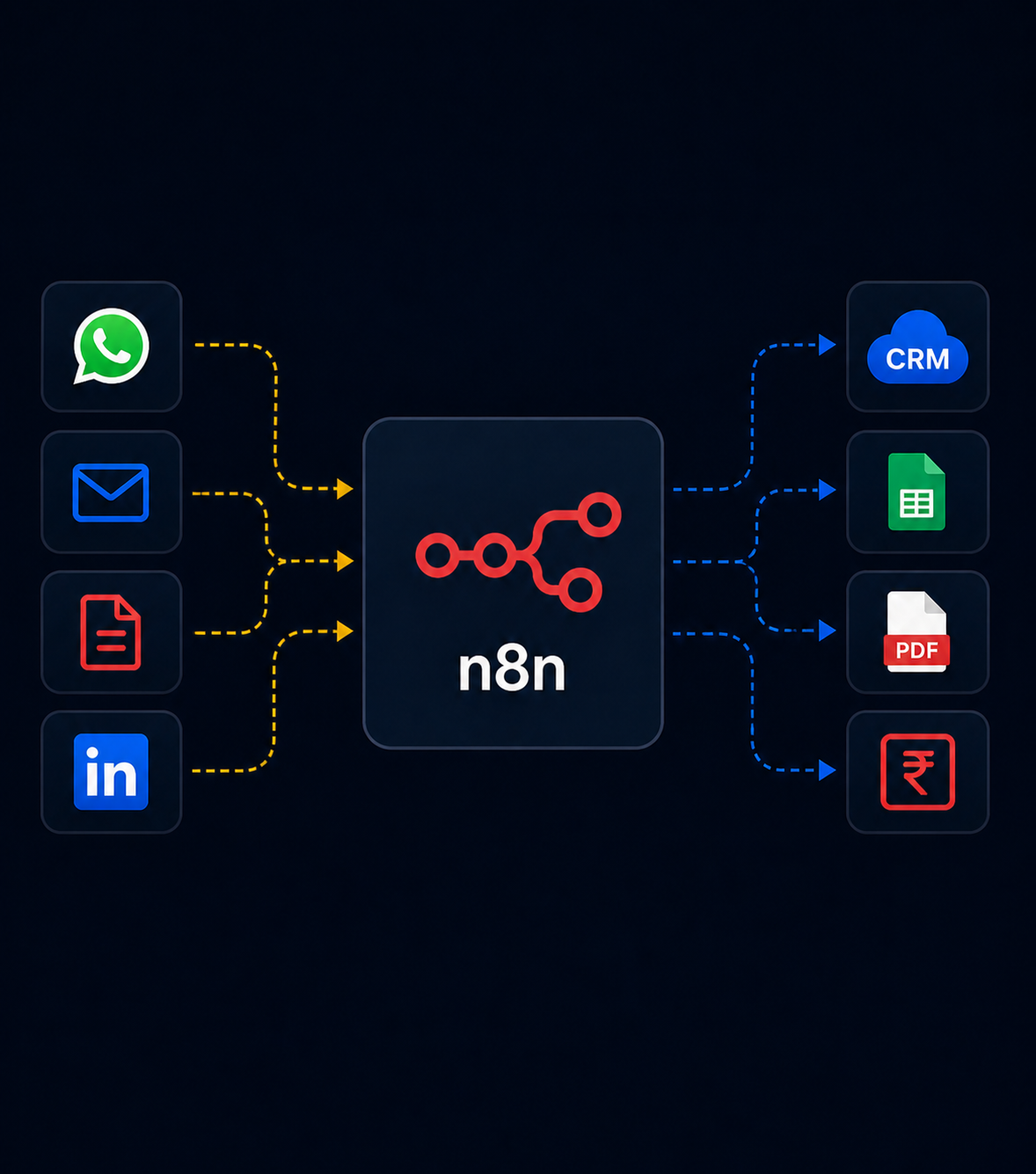
Yes – as long as those systems expose an API or the agent has another way to interact with them (browser automation, MCP connectors, etc.).
How do I know if my process is a good fit for agent automation?
Processes that are repetitive, rule-based but require some judgment, and span multiple systems are typically the best fit.
Have a multi-step process eating up your team’s time? See our Autonomous AI Agents service →