



How Indian Manufacturing SMEs Can Use AI Automation
High-ROI Starting Points
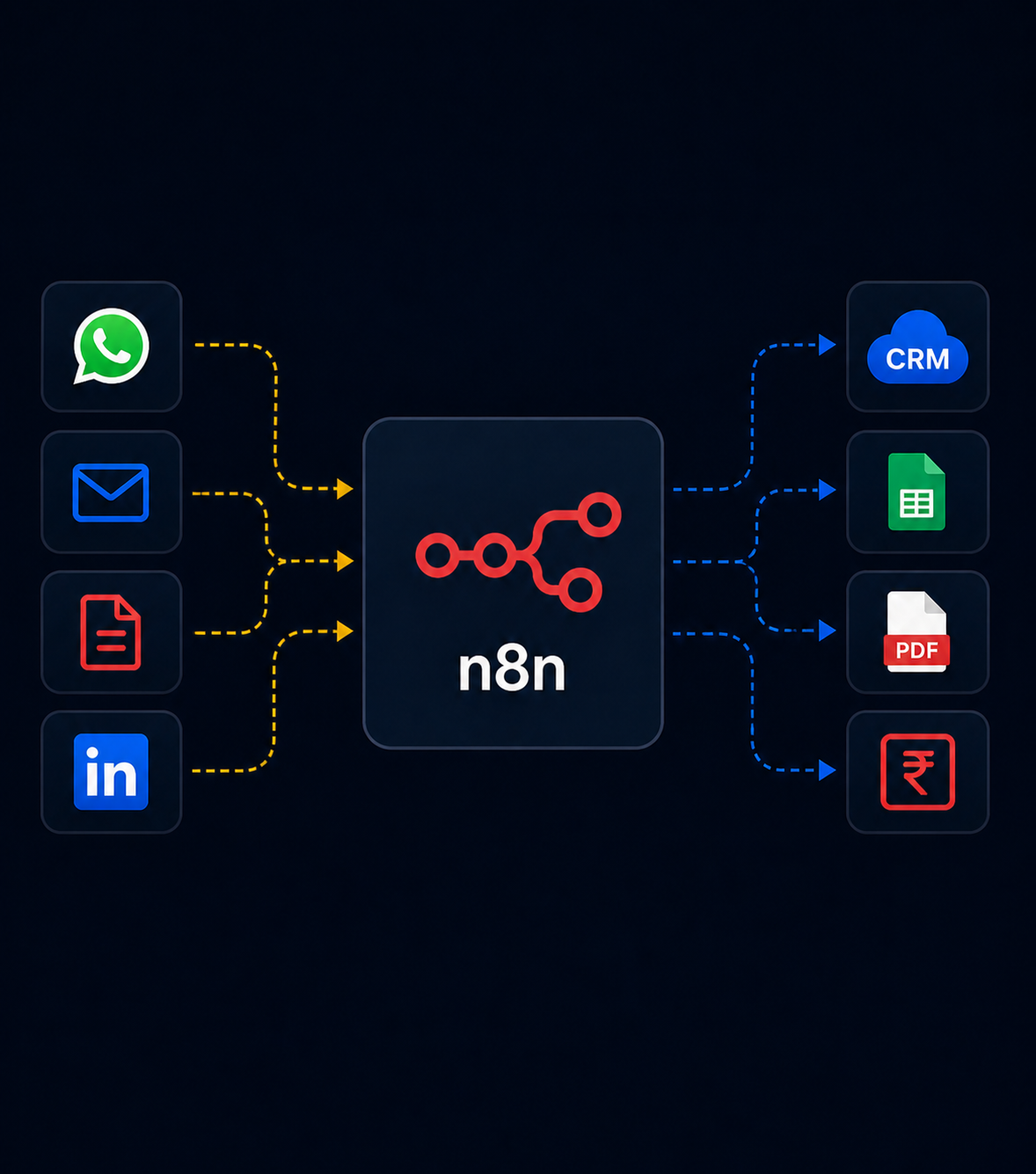
- Supplier communication: AI agents that send RFQs (requests for quotation) to multiple vendors, collect and compare responses, and flag the best options for procurement review.
- Inventory and reorder automation: Systems that monitor raw material stock levels against production schedules and automatically trigger purchase orders before shortages occur.
- Compliance documentation: AI-assisted generation and organization of quality certificates, compliance paperwork, and audit-ready documentation.
- Order status communication: Automated WhatsApp/email updates to B2B customers on order and dispatch status, reducing “where’s my order” calls.
What to Avoid Starting With
Full production-line automation (robotics, computer-vision quality inspection) requires significant capital investment and is a different category of project than software-based AI automation. Most Indian manufacturing SMEs see faster, lower-risk ROI starting with office and supply-chain workflows before considering shop-floor hardware automation.
A Realistic Rollout Sequence
| Phase | Focus | Typical Timeline |
|---|---|---|
| Phase 1 | Automate supplier RFQ and order status communication | 4–6 weeks |
| Phase 2 | Inventory monitoring and reorder automation | 6–10 weeks |
| Phase 3 | Compliance and documentation automation | Ongoing, alongside Phase 1–2 |
Frequently Asked Questions
Is AI automation only for large manufacturers?
No – software-based automation (communication, inventory, documentation) is accessible and cost-effective for SMEs, unlike shop-floor robotics which typically requires larger capital budgets.
Can AI automation integrate with existing ERP systems like Tally or SAP B1?
Yes, most modern AI automation connects via API to existing ERP and accounting systems rather than requiring a full system replacement.
What’s a realistic first project for a manufacturing SME?
Automated supplier communication or order-status updates to customers are typically the fastest to implement and show clear time savings within weeks.